
Discover why hiking in China is different from Europe, from Yunnan and Guizhou mountain villages to Huangshan, Zhangjiajie, Tiger Leaping Gorge, Mount Siguniang, and China’s changing backpacker culture. Plan a custom China hiking trip with Beyond China Travel.

When travelers think of hiking destinations, places like the Alps in Europe, the Scottish Highlands, or Japan’s mountain trails often come to mind. Yet China is home to some of the most spectacular mountain landscapes on Earth—from the snow-capped peaks of Yunnan, the dramatic karst mountains of Guilin, and the sacred summits of Mount Huangshan, Mount Emei, and Mount Siguniang, to the breathtaking valleys of Jiuzhaigou and the vast wilderness of Tibet.
So why doesn’t China have the same deep-rooted hiking obsession that many Europeans seem to share?
The answer lies not in geography, but in history.
Mountains Were Once Obstacles, Not Destinations
For many people in Europe, mountains gradually became symbols of adventure, exploration, and leisure. Hiking evolved as a recreational activity during the 18th and 19th centuries, when industrialization gave people more free time and better transportation.
China’s relationship with mountains was very different.
For centuries, particularly in western China, mountains often represented isolation rather than freedom. Vast mountain ranges shaped daily life in provinces such as Yunnan, Guizhou, Sichuan, and parts of Gansu and Tibet. Many rural communities were separated by rugged terrain, making transportation difficult and economic development slow.
For countless families, walking through the mountains was not a hobby—it was a necessity.
Some children once had to hike two hours each way just to reach the nearest school. Farmers often spent half a day carrying crops, livestock, or goods to the nearest market. Entire generations viewed mountains as barriers that limited access to education, healthcare, and opportunities.
While modern infrastructure has transformed much of rural China, these historical memories still influence how many people perceive mountain travel today.
As a result, early modern mountaineering expeditions in China were often organized by foreign climbers and exploration teams from Europe and Japan. Even today, in some remote hiking regions of Yunnan and Guizhou, it is not uncommon to encounter more international trekkers than domestic hikers on certain trails.
China’s Mountains Are Spectacularly Diverse
What surprises many visitors is the incredible diversity of China’s hiking landscapes. Some of the most searched hiking and trekking destinations in China include:
Tiger Leaping Gorge — One of the world’s deepest river canyons.

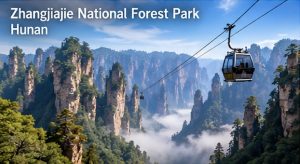
Zhangjiajie National Forest Park — The inspiration behind the floating mountains in Avatar.
Mount Siguniang — Often called the “Alps of the East.”

Best Hiking Destinations in China for First-Time Visitors
For travelers searching for the best hiking in China, a few names appear again and again: Tiger Leaping Gorge in Yunnan, Mount Siguniang in Sichuan, Huangshan Yellow Mountain, Zhangjiajie National Forest Park, Jiuzhaigou Valley, Mount Emei, and Yubeng Village. Each destination reveals a different side of China’s mountain culture—from sacred Buddhist peaks and ancient village paths to high-altitude valleys, dramatic gorges, and UNESCO-listed landscapes.
For international travelers, these destinations offer a rare combination of stunning scenery, ancient culture, and relatively uncrowded wilderness compared with many famous hiking regions in Europe.
The Uniquely Chinese Way of Climbing Mountains
One of the most fascinating cultural differences appears when you visit mountain attractions in eastern China.
In Europe, hikers often take pride in reaching a summit entirely on foot.
In China, convenience is frequently viewed as a sign of progress.
At some famous mountain destinations near prosperous coastal cities, visitors may find extensive systems of cable cars, escalators, paved pathways, and shuttle buses carrying tourists toward the summit.
In certain scenic areas, escalators stretch astonishing distances up mountainsides. During the hot summer months, some modern tourist facilities even install air-conditioning systems in enclosed sections of escalator routes.
For many Chinese visitors, the goal is not necessarily the physical challenge of hiking. The destination—the view, the cultural heritage, the temple, or the family experience—matters more than the journey itself.
This reflects a broader difference in travel philosophy: accessibility is often valued over endurance.
Is Backpacking Culture Growing in China?
Yes—but it remains a niche movement.
Among young professionals in cities like Beijing, Shanghai, Shenzhen, and Chengdu, hiking, camping, and backpacking have become increasingly popular over the past decade. Weekend treks, outdoor clubs, and self-guided adventures are attracting a growing audience.
However, the backpacker spirit in China differs from the classic European model.
Many Chinese backpackers are motivated not only by adventure but also by a desire to escape intense urban lifestyles. Some young people who leave rural hometowns for major cities eventually discover that city life does not provide the fulfillment they expected. For them, returning to nature becomes a form of personal rediscovery.
This is one reason why China’s outdoor community often emphasizes simplicity, self-reflection, and reconnecting with nature.
Why Are There Fewer Hostels in China?
Unlike Southeast Asia or Europe, China has never developed a large-scale backpacker hostel network.
Several factors contribute to this:
- Domestic tourism has traditionally focused on family travel rather than solo backpacking.
- Rapid economic growth encouraged travelers to choose hotels over budget accommodation.
- Many Chinese travelers prefer comfort and convenience when exploring scenic destinations.
- Independent long-distance backpacking remains a relatively small segment of the market.
While hostels can still be found in major destinations such as Lijiang, Dali, Chengdu, and Yangshuo, they are less common than many international travelers expect.
Hiking in China Today: A Changing Landscape
China is experiencing a fascinating transformation.
The mountains that once isolated communities are now becoming destinations for exploration. New roads, high-speed railways, and improved infrastructure have made previously remote regions more accessible than ever.
At the same time, a new generation of Chinese travelers is discovering the joy of hiking, trekking, camping, and slow travel.
For international visitors, this creates a unique opportunity. China offers some of the world’s most extraordinary mountain landscapes, yet many trails remain far less crowded than famous hiking destinations elsewhere.
Whether you’re trekking through Tiger Leaping Gorge, exploring the alpine meadows of Mount Siguniang, walking among the granite peaks of Huangshan, or venturing into the hidden valleys of Yunnan, you’ll discover a side of China that many tourists never see.
Plan Your China Hiking Adventure with Beyond China Travel
Every mountain in China tells a different story.
China’s mountains are not just beautiful landscapes—they are living stories of migration, hardship, spirituality, and modern change. At Beyond China Travel, we help international travelers design custom China hiking tours, private itineraries, and off-the-beaten-path adventures across Yunnan, Sichuan, Guizhou, Tibet, Zhangjiajie, Huangshan, and beyond.
Visit Beyond China Travel to customize your China journey and get the most detailed local tips for hiking, transportation, accommodation, food, culture, and hidden routes.

